By: Rev. Brendan Onyemegbulem
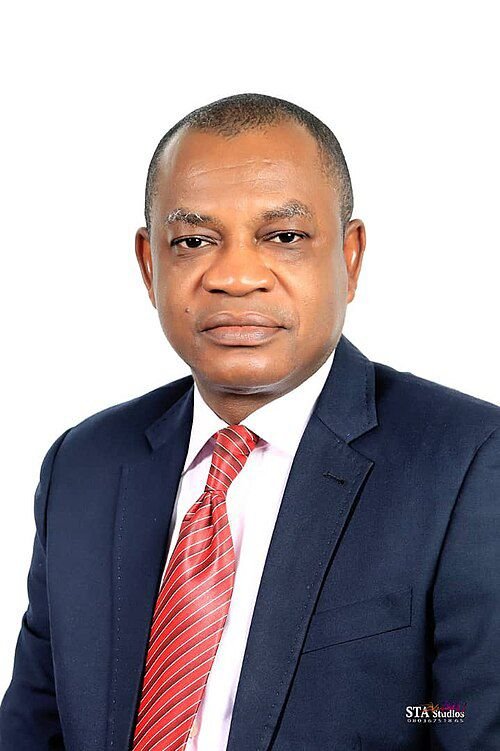
The life of Rev. Fr. Ethelbert Uwadoka finds its deepest intelligibility within the theological and moral horizon of quietude already explored as a form of strength. His personality was not an interruption of this principle but its lived embodiment. Quietude in him was not absence of voice but disciplined presence, and it was not withdrawal from responsibility but the interior mastery that makes justice possible without violence.
Within this horizon, can we discover in the life of Fr. Uwadoka a priest who became a custodian of hidden things? This is expressed in how he carried people without announcing it, especially at the altar of the Eucharist; he wept for the discouraging state of the country without display. He intercedes without recognition, especially at the liturgy of hours. His authority was not loud because it was rooted. Like a tree, he grew downward into God before he grew upward into visibility. That is why his words, when they came, carried weight. They are born from silence that has already done its work. This quietude was most evident in his understanding of justice as the consistent effort to give to each his due – an echo of Thomas Aquinas (Summa Theologiae, II–II, q.58). When this classical insight is placed alongside the life of Fr. Uwadoka, it becomes more than a definition; it becomes a biography. This is precisely where the moral imagination of sanctity emerges. In classical Christian thought, sanctity is not merely the absence of sin but the fullness of charity ordering all virtues rightly. Yet what distinguished his practice was the gentleness with which this justice was administered. Without violence, one begins to glimpse not just a just man, but a sanctified one, who loves justice and cannot trade it even with the highest bidder.
Additionally, what stood out most in daily life was also his gentleness in governance. Assignments were given with politeness, clarity, and dignity. One never felt imposed upon but was trusted. Even in the refectory, those simple shared moments of meals and conversation. His presence was quietly formative, and he never skipped to join his fellow priest/seminarian for a meal. Authority in him never crushed his personality; it refined his responsibility. One never left his presence feeling diminished but rather entrusted. He spoke softly, listened attentively, and engaged with a calm humor that made community life deeply human. In those moments, misunderstandings about his personality were often corrected without argument, as many of us came to realize how misrepresented he had been before our personal encounter with him.
This moral architecture was sustained by a life that formed others without noise. As a long-serving seminary formator in Seat of Wisdom, his influence shaped generations of priests, quietly cultivating discipline and maturity in those under his care. Even during the diocesan restructuring phase following the pastoral backlog of ordinations, his role remained stabilizing rather than performative. His collaboration with His Grace, Most Rev. Lucius Iwejuru Ugorji, during the period of apostolic administration as the Vicar General of the Diocese further reflected a quiet capacity for ecclesial order rooted in patience and discernment. This simplicity is similar to the spirituality of Ignatius of Loyola, who speaks of holy indifference, that is, the capacity to choose only what leads to God’s greater glory (Spiritual Exercises, no. 23). Fr. Uwadoka was not attached to recognition; rather, he chose only what led to God’s greater glory.
A Quiet Life, A Sudden Goodbye
Every human life, when lived with depth and fidelity, carries within it a quiet orientation toward an ultimate home. It is within this horizon that the passing of Fr. Uwadoka must be understood: not as a mere end but as a quiet return into the mystery he embodied in life. Thus, Augustine of Hippo captures this enduring clarity: “You have made us for Yourself, and our heart is restless until it rests in You” (Confessions, 1991, 3). Yet, beyond theology, there remains a human shock that refuses to be silenced. He was present at the Diaconate Ordination on Sunday, March 15th, 2026, calm, composed, and quietly joyful in that restrained manner that defined him. On Wednesday, we still exchanged messages, ordinary words carrying no hint of farewell. Then, by Friday, he was gone. No warning. No visible decline. Just silence, sudden, deep, and irreversible.
There is something profoundly unsettling and yet mysteriously fitting in this. He who lived without noise departed without noise. His death bore the same grammar as his life: simplicity, restraint, and quiet completion. Hence, what remains is not merely grief but a summons. A summons to rediscover that holiness need not be loud to be real. This life challenges us to rethink the very foundations of priestly identity. In a world that celebrates noise, we are called to discover the value in silence. In the end, his life answers the question we began with: silence can indeed be pastoral power. It is a strength because it does not need to announce itself. It is powerful because it forms without forcing, leads without noise, and endures even after speech has ended.