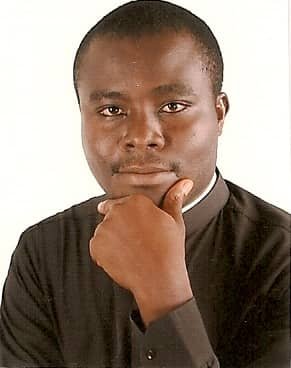
BY: Udo J. M. Iwuji, Tel: 08156198851
Short Prelude
It was St. Pope John Paul II who made this expression on Mary being present in our liturgical celebrations: “Mary is present in the memorial because she was present in the event!… She is continuously united both with Christ the High Priest and with the Church, the worshipping community, in the saving event and in its liturgical memorial.”
The Holy Mother Church, in her wisdom, organizes her activities within her year, known as the ecclesiastical year. This ecclesiastical year makes use of the civil year; that is to say, it revolves around the civil year. One ecclesiastical year begins at one part of the civil year and ends in another (it is cross-annual), and it runs in three cycles. The Church, through or within her ecclesiastical year, celebrates and reveals her faith. The celebration and revelation of these mysteries range from the mysteries of Christ’s life (incarnation, public ministry, a revelation of the kingdom now present in the very person of Jesus, death, and resurrection) to those of Mary, the mother of God, and our heroes in the faith—the saints. These mysteries of the faith, especially those of our heroes in the faith and Mary, Ever-Virgin Mother of God, are in categories. Hence, we have days of obligation like the Assumption (observed as Sunday). Other celebrations are observed as either a first-class feast {solemnity} or a second-class feast and memorial {obligatory or optional}.
The ecclesiastical year is also known as the liturgical year because in it we have our liturgies celebrated. It begins with Advent, usually the first week of December, and ends with the celebration of the Solemnity of Christ the King. Advent enables us to call to mind the long preparation of the people of God before Christ’s incarnation and birth. And Christ the King is that which brings the whole year to a close; hence, the name Christ the King. This goes a long way to vivify the very fact that Christ is the Alpha and Omega of our existence and our celebration (worship). Since the year begins with Him and ends with Him, and within the year, the mysteries of His existence are celebrated, we can simply put forth that each liturgical year is from Him, through Him, with Him, in Him, and for Him.
Mary’s Presence in the Church’s Liturgical Celebrations
The Church gives a special place in her liturgical celebration to Mary, the mother of the Lord, precisely because of her special association with the mystery of Christ. Pope Paul VI, in that precious document called ‘Marialis Cultu’ presents the place of Mary in the liturgical celebration of the Church, emphasizing mainly her attitudes in the presence of the mysteries of the Lord. This particular reflection will focus on Mary, who is always with us in our liturgical celebration throughout the seasons and the year.
Mary is continually accompanying us in this perilous journey and, as such, is ever celebrated in our liturgy. The truth remains that “wherever there is Jesus, there is Mary.”Our concern herein is the Marian presence in our liturgical celebration. Liturgy, we have to know, is not just Mass. This assertion is beautifully expressed in one of our works, Liturgical Celebrations: An Expression of Ecclesial Unity and Sanctification of the Faithful (Udo: 2009, 11-15). The Blessed Virgin Mary occupies a prominent place in the Church’s liturgy. This is evident in the position allotted to her memory, be it in the Eucharistic Prayer, in the celebration of the Sacraments and Sacramental Rites, or in the diverse expressions of prayers. Speaking about the loving presence of Mary in our liturgical celebration, this beautiful expression merits our attention: “At every liturgical celebration, Mary, the mother of God, is with us as our model, our intercessor, and our mother. And she is even more; each of these things is in the Marian celebration {Dictionary of Mary: 2006, 100}. Mary is ever-present with us in the Eucharistic celebrations. She accompanies us in each Eucharistic celebration and all through the church’s liturgical season and year. “Mary is prominently mentioned every day in the ordinary of the Mass in the Introductory Rites, at the Confiteor (I Confess …), in the Liturgy of the Word, at the Nicene Creed, and in the Eucharistic Prayer” {Dictionary of Mary: 2006, 101}
Our union with Mary, the joy of our salvation, cannot be overemphasized; that is what gained her prominence in our liturgy. Celebrating the Mass, we have four prominent Eucharistic prayers that are interchangeably used by the priests. In each of these Eucharistic prayers, Mary, the virgin daughter of Zion, is revered. In the Eucharistic Prayer 1, we recall the essential role of Mary as the mother of God, and we also reverence her Ever-Virginal Purity (perpetual virginity). This we find in the Communicates Proprian. “In union with the whole church we honour Mary, the ever-virgin Mother of Jesus Christ our Lord and God”. The Eucharistic Prayer II reminds us of the incarnation of the Word by the power of the Holy Spirit in the womb of the Blessed Virgin Mary, “He is the Word through whom you made the universe, the Saviour you sent to redeem us. By the power of the Holy Spirit, he took flesh and was born of the Virgin Mary”. This expression unites the Eucharistic Mystery with the moment of the Incarnation. The Eucharistic Prayer III presents our union with Mary in a supplicatory manner, “May he make us an everlasting gift to you and enable us to share in the inheritance of your saints, with Mary, the Virgin Mother of God…” In the Eucharistic Prayer IV, we appreciate the fact that the joy of our salvation was from God through Mary, the Ever Virgin. “Through the prophets You taught him {mankind} to hope for salvation. Father, you so loved the world that in the fullness of time you sent your only Son to be our Saviour. He was conceived through the power of the Holy Spirit and born of the Virgin Mary”
Furthermore, the Sacramental Rites celebrate our filialness to Mary. In the Rite of Religious Profession, the religious is reminded that the vows which he or she is about to profess was freely chosen by Our Lord Jesus Christ and His Virgin Mother. “Are you resolved, with the help of God’s grace, to undertake that life of perfect chastity, obedience, and poverty that Christ our Lord and his Virgin Mother chose for themselves, and persevere in it forever?” More so, it is believed that the general chapters of various religious institutes have made an effort to renew their relationship with Mary. Mary has been inserted in the mystery of Christ and the church in the light of Lumen Gentium. Her role in the perfection of religion derives inspiration from her as a simple woman who is ready to serve, who participates in the mission of Christ, and who is a guide to commitment in faith. Thus, the religious communities progressed from a quantitative, sensible, and childish type of devotion to a more interior, profound, solid, mature, and committed devotion. Mary is no longer a fairy, a myth, or a distant benevolence for the religious. In their daily life, they walk with her to the cenacle and to Calvary.
In the celebration of the sacrament of penance, Mary’s help is sought because she is with us. One of the prayers that the priest can say over the penitent has it thus “May the passion of Our Lord Jesus Christ, the intercession of the Blessed Virgin Mary and of all the saints, whatever good you do and pains you suffer, heal your sins, help you to grow in holiness, and reward you with eternal life. Amen”. During the ordinations {diaconate, priestly, and consecration of bishop}, the litany of the saints is chanted, and in doing so, we equally implore the help of Mary and also appreciate her presence. Her name lies primus {first} in the litany.