Minister Commends Mbaise for Its Rich Cultural Heritage
By Tim Etoh
The 2026 Iri Ji Mbaise Festival may have ended, but its memories continue to linger, generating interest and discussion across social and mainstream media platforms in Nigeria and beyond.
The 2026 edition of the annual cultural festival was held on August 15, 2026, at the Community School Ground, Ovuru, Oke-Uvuru, in Aboh Mbaise Local Government Area of Imo State.
The successful celebration, despite several challenges, exemplified the courage and resilience of the Mbaise people and their determination to preserve and promote their cultural heritage, notwithstanding political uncertainties, persistent rainfall and the poor state of some rural roads leading to the venue.
There had been palpable uncertainty over the celebration of this year’s festival, particularly concerning the actual venue. The organizers eventually confirmed Ovuru as the venue, while the heavy rains further complicated access to the community, leaving some of the connecting rural roads in difficult condition.
The challenges, however, did little to dampen the enthusiasm of the people. The arena, pavilion and surrounding areas were filled to capacity with cultural enthusiasts and visitors, creating a colourful spectacle that attracted the attention of the Honourable Minister of Arts, Culture and Digital Economy, who was represented at the event by an aide.
The Minister’s representative commended the organizers and the people of Mbaise for their efforts to preserve and promote their cultural heritage, describing the festival as an event with the potential to attain global recognition and become a veritable source of tourism-based revenue for Mbaise, Imo State and Nigeria.
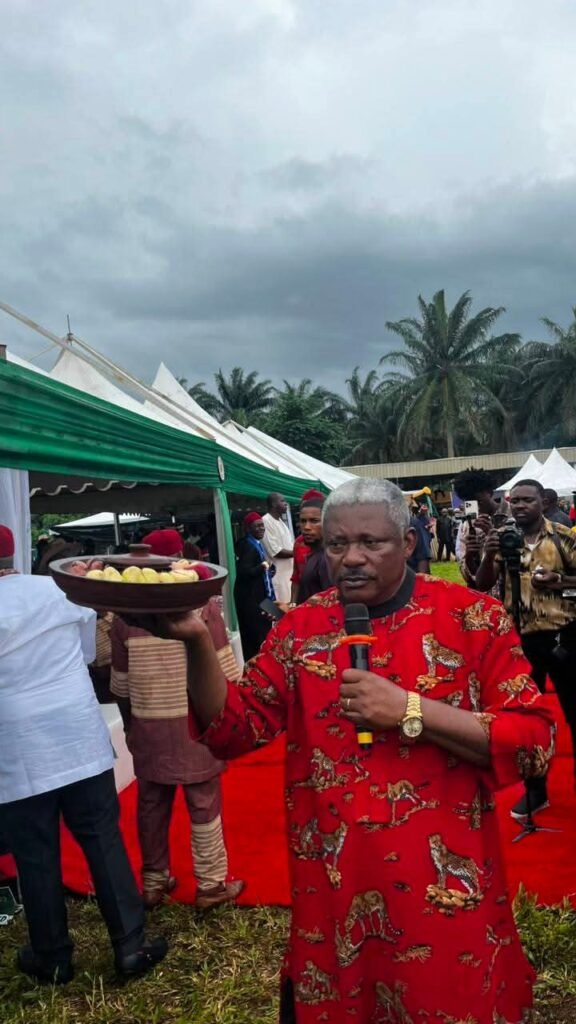
The event opened with a rendition of the Lord’s Prayer in the distinctive Abigbo style, setting the tone for a celebration where faith, culture and communal identity converged.
In his brief address, the Chairman of the occasion, Okenze Felix Ohiri Amadi, welcomed the Minister’s representative and other participants who had travelled from near and far to attend the 2026 edition of the annual festival.
He commended the traditional rulers of Mbaise for their efforts in managing the security situation in the area, which, he said, had contributed to the relative safety being experienced by residents and visitors.
Okenze Amadi also thanked the Imo State Government for its attention to roads and other infrastructure in Mbaise, while appealing for greater intervention on rural roads that have deteriorated considerably. He assured those present, as well as viewers following the event through various media platforms at home and abroad, of an entertaining display of Mbaise’s cultural dexterity and hospitality.
Following the opening speeches and other formalities, the stage came alive with performances by various cultural groups, including Abigbo Mbaise, Ese and Agbacha Ekuru Nwa, alongside other contestants representing the three local government areas that make up Mbaise.
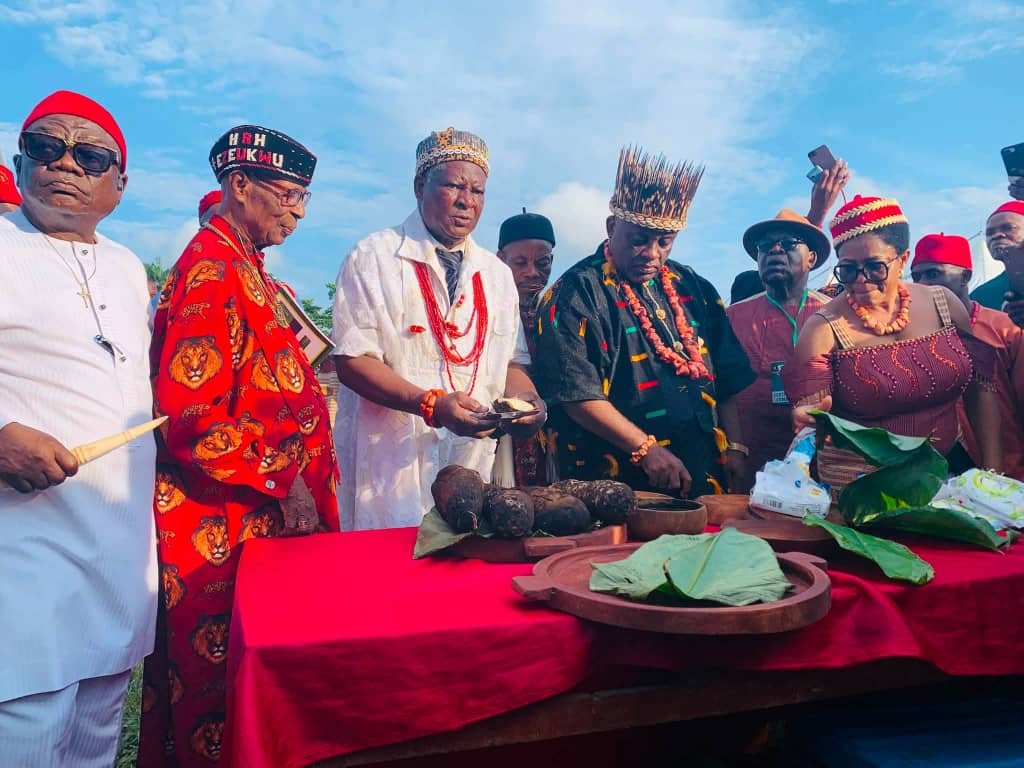
As part of the programme, traditional rulers, accompanied by Ndi Ezeji, visited the makeshift yam barn and returned with yam tubers, in keeping with the symbolism of the New Yam Festival.
The climax came with the Iwa Ji, or ceremonial cutting of the yam, performed by prominent sons and invited guests, including former Governor of Imo State, Chief Emeka Ihedioha; Ezinwa Stanley Amuchie; Dr Alex Mbata; Okenze Felix Amadi; and others.
Merit awards were subsequently presented to deserving sons and contributors, among them Uche Obinna, son of the late Dr Sir Warrior of Oriental Brothers International fame.
For observers of Mbaise culture and tradition, Iri Ji remains one of the oldest and most colourful annual festivals of the people. Beyond its ceremonial significance, it provides an occasion for the community to celebrate its cultural identity, give thanks for a successful harvest and honour yam, traditionally regarded as the king of crops.
The festival was, however, viewed differently in the past, when aspects of its traditional observance were associated with pagan practices and attracted criticism from Christians across denominations.
Over time, traditional and religious leaders have worked to remove elements considered incompatible with Christian faith, while preserving the cultural and communal dimensions of the celebration. The result has been a festival that increasingly presents Mbaise culture to a wider audience while retaining its distinctive traditional character.
Indeed, the Iri Ji Mbaise festival now enjoys growing popularity both in Nigeria and among cultural enthusiasts across the globe. It has also gained recognition within the Federal Ministry of Arts, Culture and the Creative Economy as a cultural festival with significant potential to promote Nigeria’s tourism industry and contribute to the growth of Imo State’s hospitality sector.