August 19, 2026 has ushered in another campaign atmosphere for Nigeria. Politicians are now jostling for the voices of the ballot to determine their fate. The political clime presents a country standing at a pivotal crossroads. As Africa’s most populous nation, Nigeria possesses undeniable potential, driven by a dynamic, tech-savvy youth population and unmatched natural resources. Yet, the nation remains anchored by structural bottlenecks across its economic, political, religious, and infrastructural foundations. The possibility of unlocking real progress, through effective leadership, continues to confront the nation.
While Nigeria is at the threshold of the 2027 general elections, public discourse continues to center on democratic participation, electoral integrity, and institutional accountability. Broad participation from civil society, civic advocates, and democratic institutions reflects a widespread desire to strengthen national governance and foster transparent democratic processes.
A central aspect of this ongoing preparation is the role of citizens who are the voices of the ballot and whose responsibility is to work towards upholding democratic principles. Continuously, civic organizations have frequently highlighted that meaningful democratic outcomes rely on an informed and active electorate. Preparations for this general elections, rely heavily on voters who are encouraged to engage thoughtfully in the political process by staying informed on policy platforms, verifying their voter details, and evaluating candidates based on their track records and community goals. Campaigns will bring promises, slogans, rallies, endorsements, and political debates, but the big question remains; What will change? Who should we listen to? Who should we trust? What type of country do we need? Can we trust INEC?

Public confidence has remained an issue. Unfortunately, the political voter intimidation meted by the ruling party at the just concluded gubernatorial election in Osun state, raises concerns for the upcoming 2027 General elections. While the Independent National Electoral Commission (INEC) has provided portals, more still needs to be done to forestall voter apathy and lack of confidence in the electoral process.
Forces of ethnicity, religion, money, propaganda, or empty promises, should not drown out informed judgment. A time like this emphasizes the responsibilities of election management authorities to maintain transparency. INEC should ensure that election day logistics proceed smoothly across all polling units. Tools such asINEC Result Viewing Portal (IReV), should be employed to allow observers and voters to access public polling unit documentation, supporting transparency and civic engagement throughout election cycles.
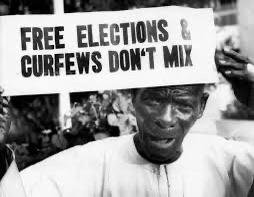
Electoral challenges are real. With political parties beginning to roll out campaigning drums, citizens should be properly guided and informed in order to vote responsibly. The ballot is not just a political ritual; it is an expression of public choice and accountability. The ballot may appear as piece of paper with a thumbprint, behind it is a voice. The 2027 general elections should be a time to listen to these voices, not just competitions, political tussles or ethnic and religious war, but a moment to reassure public confidence and reflect the choice of the people.
Our voices are the ballots, preparations for our voices to be heard through the ballot begin now!!