“Live measured by its fidelity to the salvation of souls,” Fr. Anyanwu charges.
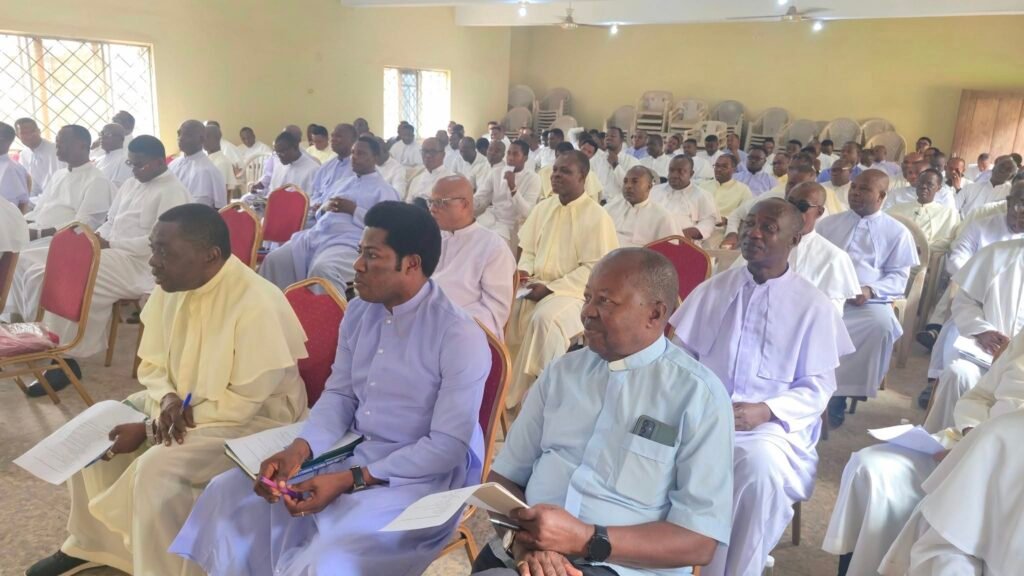
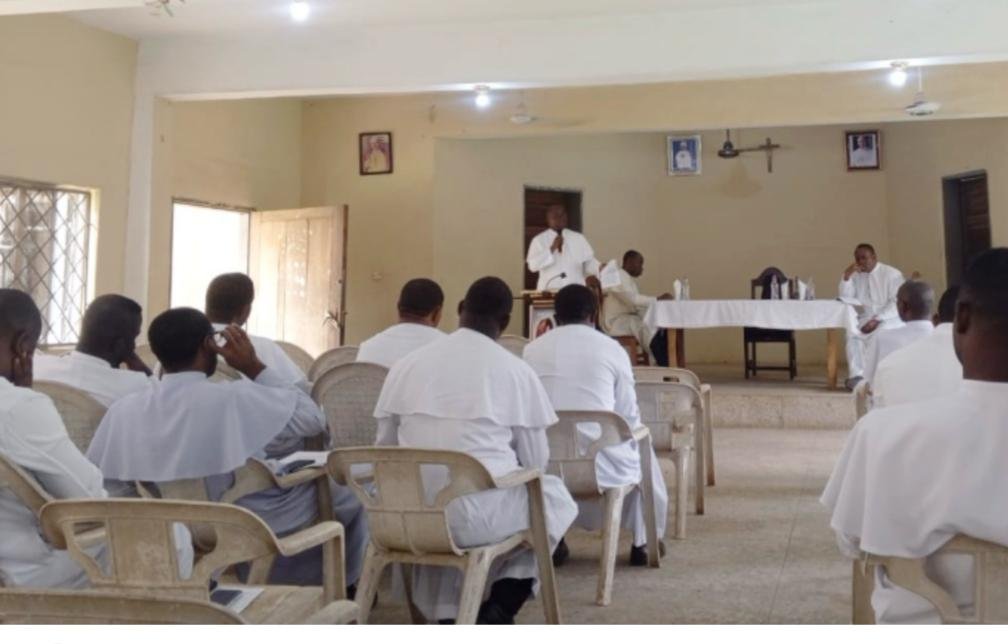
On Monday, 27 April 2026, priests of the Ahiara Diocese ordained from 2019 to date, together with deacons ordained in March this year, gathered at the Secretariat Hall for a seminar organized by the diocese with Very Rev. Fr. Dr. Anthony Nwachukwu-Odu as the chairman.
The seminar, themed “Salus Animarum: The Essence of Priestly Consecration and Ministry,” was delivered by Very Rev. Fr. Anthony Chukwuemeka Anyanwu, Parish Priest of Holy Ghost Parish, Uvuru; Dean of St. Athanasius Deanery, Oke-Uvuru; and Chairman of the Diocesan Education Board.
In his opening address, Fr. Nwachukwu-Odu underscored the urgency of ongoing formation as intrinsic to priestly identity, recalling that the salvation of souls remains the supreme law and animating principle of the Church’s mission. He reminded participants that ordination does not conclude formation but inaugurates a lifelong process of conformation to Christ the High Priest. He therefore urged them to receive the seminar as a moment of renewal, deepening pastoral commitment, and strengthening fidelity in the face of contemporary challenges.
In his presentation, Fr. Anyanwu, drawing on both pastoral experience and formative insight, led the participants back to the substance of their vocation. He began from the Church’s governing principle, salus animarum suprema lex (C. 1752), insisting that priestly life must be measured entirely by this end. From this foundation, he called for sincere interior conversion, noting that no priest can effectively renew others without first being renewed himself.
He articulated this interior demand through an integrated vision of the human person: obi (the heart), chi (the divine spark), mmuo (the soul), and eke (life force within the community), all of which, illumined by grace, orient the person towards God. The priest, chosen and consecrated, must therefore be inwardly ordered if his ministry is to bear lasting fruit.
On priestly identity, he was clear and firm: the priest is called by God and, through ordination, acts in persona Christi capitis. This dignity demands fidelity; it is not presumed but lived.
He then treated the threefold office of the priest with precision. In the munus sanctificandi, the Eucharist stands at the center as the source and summit of priestly life. It must never become routine; rather, it demands reverent celebration, careful homiletic preparation, and personal integrity. In the Sacrament of Penance, the priest must remain a penitent, attentive both to his own reconciliation and to healing broken relationships. In the Anointing of the Sick, he mediates Christ’s healing presence.
In the munus docendi, he stressed discipline and responsibility: preaching must be prepared, faithful, and edifying, never directed against legitimate authority. Catechesis, he noted, remains indispensable.
In the munus regendi, he emphasized that authority is service. The priest is configured not for privilege, but for sacrifice, leading through self-gift in imitation of Christ.
All these converge in pastoral charity, which he presented as the soul of priestly ministry. It must shape speech, action, and presence, expressed through availability, accessibility, and genuine care for both the spiritual and, oftentimes, material needs of the faithful. The priest either builds communion or weakens it.
He concluded with a pointed insight: a sad priest is a disaster; a joyful priest is a good priest. Joy, rooted in fidelity, is itself a form of witness.
The session featured questions and contributions that enriched discussion and deepened engagement. At the close, Fr. Paschal Njoku delivered the vote of thanks; Fr. Romanus Ugoh, a member of the organizing committee, led the closing prayer; and the Diocesan Chancellor, Very Rev. Fr. Evaristus Mbata, imparted the final blessing.
The seminar ended with a clear charge: the priest must live what he celebrates, teach what he believes, and lead as one who serves, allowing the salvation of souls to remain not an abstract ideal but the steady, demanding center of his life and ministry.