…Proposes an unarmed and disarming peace
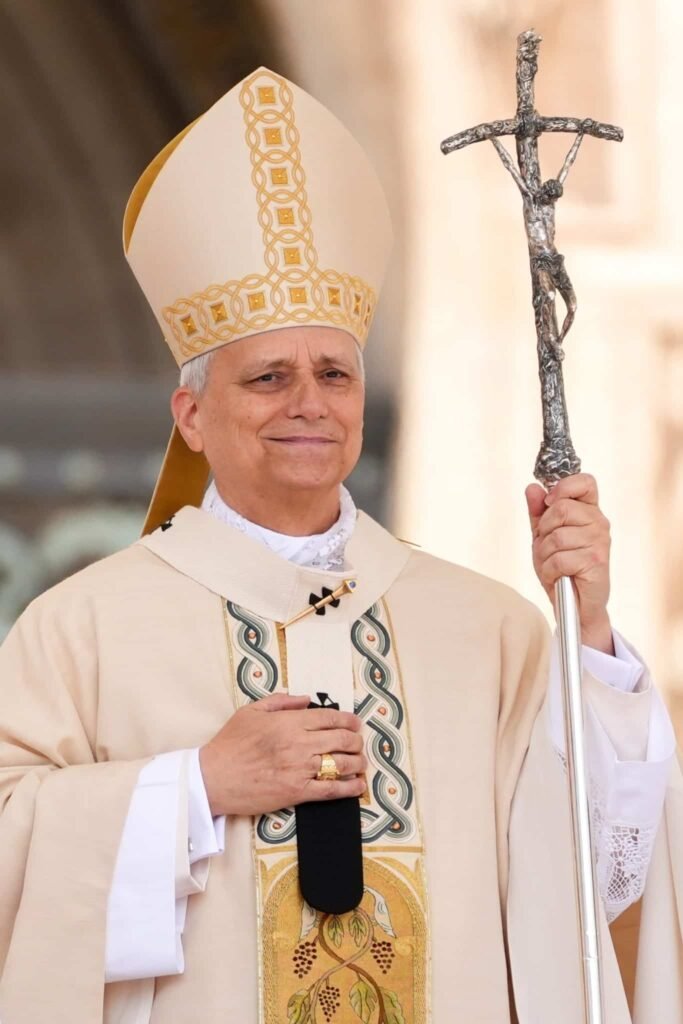
His Holiness, Pope Leo XIV, has released deep sentiments of peace for the 59th World Day of Peace, proposing an unarmed and disarming peace for our world today, filled with many challenges.
Addressing a world troubled by conflicts, poverty, disease, injustice, inequality, etc., the Holy Father referred to the peace infused with New Life on the evening of Easter on the lips of the risen Jesus, when he said, “Peace be with you.” “The peace of the risen Jesus is unarmed, because his was an unarmed struggle in the midst of concrete historical, political, and social circumstances,” the pontiff wrote in his message for the 59th World Day of Peace for January 1, 2026.
The Pope narrated that, from the very evening of his election as Bishop of Rome, his interest was to join his own greeting to this universal proclamation. “And I would like to reiterate that this is the peace of the risen Christ, a peace that is unarmed and disarming, humble and preserving. It comes from God, who loves us all unconditionally,” he stated.
The Holy Father reflected on a world marked by fear, militarization, and the threat of war in his first message for this observance of World Day of Peace. He addresses the seriousness of the moment while proposing a vision of peace that is “unarmed and disarming,” resisting violence not through force but through moral clarity, dialogue, and the conversion of hearts.
“Peace be with you!”—the greeting of the Risen Christ—stands at the center of the Message. Pope Leo XIV stated that these words “do not merely desire peace, but truly bring about a lasting transformation in those who receive it,” affirming that Christian peace is active and disruptive in its refusal of violence.
He acknowledged fear as the currency of war, thus warning that when societies lose sight of peace as a lived reality, they accept narratives in which war appears inevitable, even necessary.
“It is no coincidence,” the Pope continued, “that repeated calls to increase military spending and the choices that follow are presented by many government leaders as a justified response to external threats. The idea of the deterrent power of military might, especially nuclear deterrence, is based on the irrationality of relations between nations, built not on law, justice, and trust, but on fear and domination by force. “
This approach, he said, does not bring security but entrenches instability and perpetuates anxiety.
Referencing Saint John XXIII, Pope Leo XIV recalled how people today live “in the grip of constant fear,” aware that weapons capable of catastrophic destruction already exist and that war could erupt “by some chance and unforeseen circumstance.” He cites concrete figures, noting that global military expenditure rose by 9.4 percent in 2024 alone, reaching $2.7 trillion—resources directed toward instruments of death rather than human development.
The Message highlighted a shift in political and cultural attitudes, where preparedness for war is viewed as prudent and disarmament as naïve. Pope Leo XIV wrote that “when peace is not a reality that is lived, cultivated, and protected, then aggression spreads into domestic and public life.” He warns that this normalization of confrontation dominates global politics, undermining diplomacy and international law.
The Pope went on to address the role of emerging technologies, including artificial intelligence, in military decision-making. He calls this a “destructive betrayal of the legal and philosophical principles of humanism,” as machines increasingly assume responsibility for life-and-death choices, while economic interests drive rearmament.
The Pope reiterated that the Gospel links peace and nonviolence. “The peace of the risen Jesus is unarmed,” he writes. “His was an unarmed struggle in the midst of concrete historical, political, and social circumstances.”
He recalled the challenge faced even by the disciples: “Put your sword back into its sheath.” Christians, he noted, are called to recognize past complicity in violence and commit to prophetic witness.
In a world that equates strength with domination, goodness itself becomes “disarming.” Pope Leo XIV reflects, “Perhaps this is why God became a child,” pointing to the defenselessness of Bethlehem as a revelation of divine power.
Drawing again on Saint John XXIII, the Pope stressed that disarmament must extend beyond the realm of weapons. “Unless this process of disarmament be thoroughgoing and complete and reach people’s very souls, it is impossible to stop the arms race.”
He insisted that fear must be addressed at its root through the renewal of minds and hearts, replacing suspicion with trust. True peace, he writes, “cannot consist in the possession of an equal supply of armaments but only in mutual trust.”
Religions, he added, have a responsibility to avoid using faith to justify violence or war and instead to be “houses of peace,” where hostility is addressed through dialogue, justice, and forgiveness.
“True peace cannot consist in the possession of an equal supply of armaments but only in mutual trust,” he stressed.
The message also addressed the public authority. Pope Leo XIV calls for a renewed commitment to diplomacy, mediation, and international law, lamenting the erosion of treaties and the weakening of supranational institutions.
He highlighted that peace is not a utopia but a choice—personal, communal, and political. Quoting Pope Francis, he warns against narratives that present violence as inevitable, noting that such narratives are tools of domination.
The message concluded with a vision rooted in hope, recalling the biblical promise of swords turned into ploughshares. In the Jubilee of Hope, Pope Leo XIV invites humanity to begin a “disarmament of heart, mind, and life,” trusting that God’s promises call for responsibility. Peace, he wrote, “exists; it wants to dwell within us.” The task is not to create it but to welcome it—and to allow it “to disarm us.”