There is a way in which a nation grows tired without collapsing, continues to move without truly advancing, and speaks the language of hope while quietly negotiating with despair; and in such a state, neither full darkness nor convincing light, people begin to adjust to what should never be normal, learning to endure what ought to be resisted and to explain away what ought to be confronted.
This, in many respects, describes the uneasy moral climate in which many Nigerians now live. Across communities marked by recurring violence and towns burdened by fear, a persistent question lingers: how did we arrive here, and how do we move forward when the very structures meant to safeguard life, dignity, and justice appear strained or compromised? Added to this is a growing fatigue with public life, in which elections inspire caution rather than confidence and the ordinary citizen increasingly wonders whether his voice truly counts.
It is into this atmosphere that the Church proclaims Easter, not as decoration nor as escape, but as a claim both unsettling and luminous: that life is not exhausted, that truth cannot be permanently buried, and that the future, though contested, is not closed.
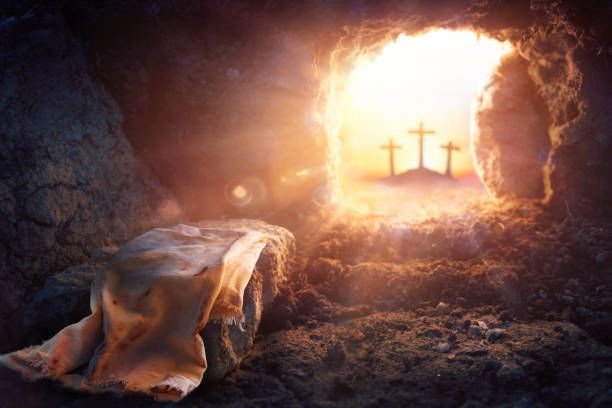
At the heart of Easter stands a simple but decisive fact: the stone did not remain where it was placed. That stone, heavy and deliberate, was meant to bring finality, to seal off hope, to ensure that what had begun with promise would end in silence. It carried the weight of fear, power, and calculated closure. And yet, it did not hold.
This is not merely an episode in sacred history; it is a pattern within history itself. Whenever systems conspire, whether through violence, deception, or indifference, to suppress truth and defer justice, Easter stands as a contradiction. For the resurrection is not only the reversal of death; it is the exposure of its limits.
It refuses both easy despair and shallow optimism, insisting instead on a deeper realism, one that recognizes suffering without granting it the final word. The risen Christ returns not untouched, but bearing wounds, now transformed, revealing that renewal does not bypass suffering but passes through it and draws from it new life. For a nation such as ours, this matters.
It means that violence, corruption, and institutional failure, however real and urgent, do not define our ultimate horizon. They demand a response, but they are not final.
Yet Easter does more than console; it summons. It calls for people who resist cynicism, who remain morally awake, who insist on truth and justice even when inconvenient, and who recognize in one another a dignity that cannot be negotiated.
As the nation looks towards 2027, the temptation will be to withdraw, to disengage, to conclude that nothing can change. Easter unsettles such conclusions, not by offering guarantees, but by reminding us that history is not a closed script. The stone was meant to remain closed. It did not.
This does not promise immediate success, but it rejects resignation. To abandon responsibility, to accept disorder as destiny, is to stand against the very logic of the Resurrection. To proclaim that Christ is risen is not merely to affirm a doctrine; it is to adopt a way of being, marked by stubborn hope, disciplined courage, and fidelity to truth.
And so, Easter returns not as repetition but as a question: Will we allow the stones of fear, apathy, corruption, and injustice to remain, or will we take our place in the slow, necessary work of their removal? For beneath them lies a possibility that refuses to die.
And this is the enduring gift of Easter: not that it removes the struggle, but that it gives it meaning; not that it silences the darkness, but that it places within it a light that cannot be overcome. In such a light, even a wounded nation may yet find its way.
Happy Easter!