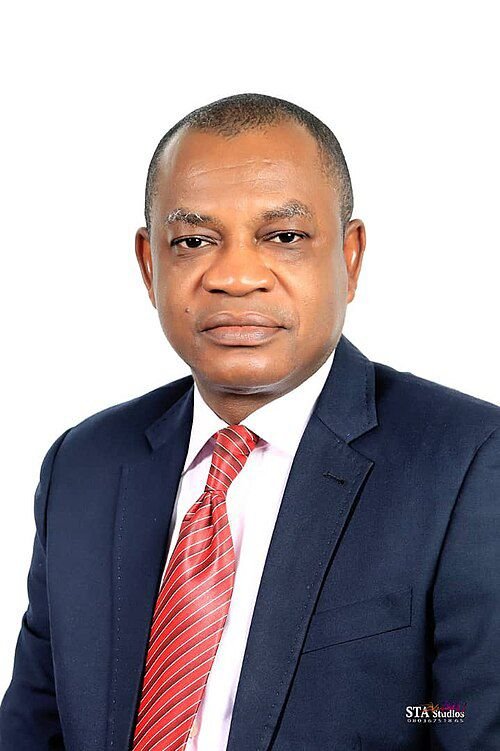
By: Fr. Innocent Ike Nwachukwu, Ph.D.
Sacred silence during Holy Week is a profound Catholic, spiritual, and liturgical practice. It acts as an important theological bridge between Christ’s passion and resurrection, serving as a purposeful, redemptive pause that transforms the agony of death and the empty tomb into the triumph of new life. Far more than a mere absence of noise, this silence allows us to escape modern distractions and enter the depths of the Triduum, understanding the weight of the cross and the transformative power of the resurrection. It represents the void, the space between human suffering and glorious victory, where the world held its breath in a silence of anticipation, trust, and hidden hope. While Holy Week begins with Palm Sunday, the intensity of this silence peaks during the Sacred Triduum, three days acting as a single, sustained act of adoration, mourning, and anticipation.
Holy Thursday (silence of suffering)
The sacred Triduum begins on Holy Thursday evening with the Mass of the Lord’s Supper, which commemorates the Last Supper, the institution of the Eucharist, and the priesthood with the washing of the feet (a call for service). While this liturgy is vibrant, it ends with a stark transition: the altar is stripped, the Eucharist is moved, and the sanctuary lamp is extinguished. The subsequent Adoration at the Altar of Repose constitutes a movement into silence, inviting us to spend time in “Gethsemane” in silence, keeping watch with Jesus, who has been arrested and abandoned to suffer alone.
Good Friday (silence of death)
Good Friday is marked by a profound, liturgical silence. In the Roman Rite, it is the only day of the year when the Mass is not celebrated. Instead, the Church is engulfed in silence, focusing intensely on the Passion narratives and the adoration of the Cross, not the Eucharist. The service begins with bishops/priests/deacons prostrating themselves in silence before the altar, a gesture of absolute humility, profound sorrow, and identification with the suffering servant (Christ). On this day, the stripped altar, absence of musical instruments, and silence signify that the “Bridegroom is taken away.” Good Friday liturgy ends without a formal dismissal, and in many traditions, the Church remains dark and silent. Evidently, the magnitude of Christ’s crucifixion surpasses words, making silence the only appropriate, humble response to divine mercy. This silence is active, a shared desolation with the disciples, and a reflection on the immense price of redemption. It is a time to meditate on the “seven last words of Jesus” on the cross and on his immense love and sacrifice for humanity.
Holy Saturday (great silence – silence of the tomb)
Holy Saturday is often described as the “longest day,” a day of unparalleled quiet, sometimes called “Silent Saturday.” It is a day of transition between the agony of the crucifixion and the joy of the resurrection, where the Church dwells in “the stillness of the tomb.” Given this perspective, Pope Leo XIV, in his weekly Catechesis, acknowledges that Holy Saturday “is the day of the great silence, in which the sky seems mute and the earth immobile, but it is precisely there that the deepest mystery of the Christian faith is fulfilled. It is a silence laden with meaning, like the womb of a mother who carries her unborn but already living child” (Pope Leo XIV, Catechsis, Holy See Press Office, Vatican City, September 17, 2025).
Obviously, this silence is not empty; it is a “sacred pause” that represents the “great silence” that fell over the earth while “the great King sleeps.” On Holy Saturday, while the world is silent, theologians suggest that Christ is intensely active, descending to the realm of the dead to seek out the lost sheep, bringing light to those in the shadow of death, and freeing “Adam and Eve” from their captivity. Hence, the ancient homily on Holy Saturday reads: “Today there is a great silence over the earth, a great silence and stillness, a great silence because the King sleeps; the earth was in terror and was still because God slept in the flesh and raised up those who were sleeping from the ages. God has died in the flesh, and the underworld has trembled” (An Ancient Homily on Holy Saturday).
By entering into this silence, we do not simply recall a past event but participate in the “hidden truths of Scripture.” The stillness of Holy Saturday culminates in the Easter Vigil, the “mother of all vigils,” which erupts with light (Paschal light) and sound (the Exsultet/Alleluia), transforming the “strange silence” of the grave into the joyous announcement of the resurrection. This journey from silence to proclamation ensures that the celebration of Easter is not merely a superficial joy but a profound, deep-seated victory over death.
In his message for the 46th World Communications Day, Pope Benedict XVI said that silence is not an empty void but an essential, active component of communication, prayer, and deep human relationships. He argued that in a noisy, media-driven world, silence is necessary for listening to God, fostering interior depth, and preventing words from becoming superficial. Thus, he writes: “Silence is an integral element of communication; in its absence, words rich in content cannot exist. In silence… ideas come to birth and acquire depth… By remaining silent, we allow the other person to speak, to express him or herself… In this way, space is created for mutual listening, and deeper human relationships become possible. It is often in silence, for example, that we observe the most authentic communication taking place between people who are in love: gestures, facial expressions, and body language are signs by which they reveal themselves to each other. Joy, anxiety, and suffering can all be communicated in silence” (Pope Benedict XVI, Message for the 46th World Communications Day, Holy See Press Office, Vatican City, May 20, 2012).
Pursuing this logic, it is a profound truth that we cannot simultaneously converse with God and the world. We need the sacred space created by silence to turn our undivided attention toward him, even if only for a few precious moments each day. Thus, Saint Ignatius of Antioch writes, “Whoever has understood our Lord’s words understands his silence because God is known in his silence” (Ignatius of Antioch, Letter to the Ephesians, XV, 2). In other words, if we find ourselves where God is seemingly silent, we should not panic or think that he is not active. God is quietly rearranging the stage of our lives behind the scenes, orchestrating every detail. At the right time, the curtain will rise, placing us exactly where we need to be to fulfill his divine purpose, mission, and vision.
Regrettably, we live in a world that is so noisy, a world that “generates so much noise that seeking moments of silence has become both harder and more necessary than ever before.” However, to appreciate the beauty of creation, the beauty of our own existence, and the beauty of our faith and relationship with God, we need silence. According to Cardinal Sarah, silence is the “indispensable doorway to the divine… more important than any other human work… for it expresses God. The true revolution comes from silence; it leads us toward God and others to place ourselves humbly and generously at their service” (Cardinal Sarah, God or Nothing: A Conversation on Faith with Nicolas Diat). In silence, God speaks to us, and the power of his word is enough to transform our very being. In silence, we wait for God so that when he speaks, we may listen and then act. “But we must wait patiently, even though the wait can be unbearable at times.”
The greatest challenge we face as Christians is navigating God’s silence in our lives. We must remember that while Good Friday was marked by dramatic signs, “darkness came over the whole land until three in the afternoon because of an eclipse of the sun… the veil of the temple was torn down the middle” (Lk 23:44-45), Holy Saturday was defined by a great, unsettling silence. That silence caused the disciples to lose hope, leaving them confused, shocked, and ready to abandon everything they had learned from Jesus. Like the apostles, we all face a “Silent Saturday” (great silence), the challenging interval between our struggles and the solution, our questions and the answer, the offered prayer and the answer thereof.
Given this, it is challenging to maintain faith and prayer when circumstances refuse to change, especially in times of grief, job loss, injustice, or illness. However, God’s silence does not mean his absence or non-existence. He sees our struggles and specializes in sudden, unexpected reversals. Just as he turned the sorrow of Good Friday afternoon into the triumph of Easter morning, he can intervene to transform our situations for good.
As we enter fully into Holy Week, we are reminded that this is the most sacred time of the year, beginning with Palm Sunday and culminating in the Easter Vigil. We are invited to celebrate the Paschal Mystery by fully participating in the beautiful liturgies of Easter. We encourage all to observe the solemnity of the Triduum with deep faith and devotion, fostering a spirit of prayer and silence as we journey towards the great feast of Easter.