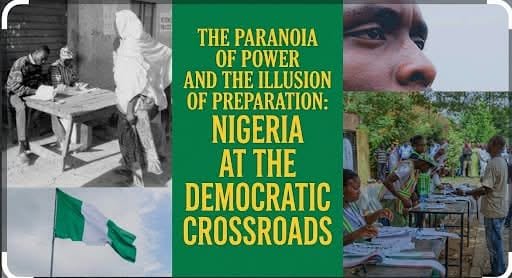
Nigeria is preparing for another election. But beneath the flurry of political alliances and campaign calculations lies a more consequential question: are those in the race for power preparing to govern or merely to win?
With the presidential and National Assembly elections scheduled for 16 January 2027, President Bola Tinubu has launched his re-election campaign, while opposition parties are positioning their candidates. Meanwhile, millions of Nigerians remain burdened by rising living costs, insecurity, unemployment and the struggle for basic necessities. Political actors are calculating their routes to power while citizens await the dividends of governance.
This is the paranoia of power: political survival elevated above public responsibility. For incumbents, it means treating criticism as a threat; for opponents, becoming so preoccupied with removing the government that they neglect to demonstrate what they would do differently. One risks mistaking staying in office for governing well, the other wanting power for being prepared to exercise it.
Its companion is the illusion of preparation. Rallies, endorsements and campaign machinery may win elections, but they cannot establish competence. Readiness to govern demands credible policies, capable personnel, realistic funding and measurable commitments. Nigerians deserve specifics on how to tackle insecurity and on steps that would gurantee employment, electricity, education and healthcare, not another catalogue of promises. The incumbent must account for the government’s record; challengers must prove the credibility of their alternatives. Neither slogans nor spectacle can substitute for evidence.
But credible alternatives matter little if voters are denied a fair choice. Democracy begins within political parties, where candidates emerge and electoral competition takes shape. When nominations are dictated by opaque arrangements, financial influence or powerful patrons, voters inherit choices shaped by interests they never had the opportunity to question. A party that denies its members a fair contest cannot credibly promise the nation a democratic future.
A level playing field requires fair rules, transparent nominations, freedom from intimidation and impartial enforcement, not identical resources or popularity. Incumbency must not confer unlawful advantage, public funds must not finance partisan campaigns, and state institutions must remain above party interests. Candidates should compete on their records and programmes, not patronage or spending power.
Public confidence in INEC must be earned through transparency, impartiality and verifiable procedures. Yet even a credible election cannot guarantee credible government. The ballot confers a mandate; it does not ensure its responsible exercise. That requires legislative oversight, an impartial judiciary, a free press and citizens who demand accountability beyond election day. Democracy is diminished when participation is reduced to periodic voting and accountability disappears between elections.
Citizens must reject vote-buying and the exploitation of ethnic and religious loyalties. However, condemning voters who accept inducements without confronting the hardship that makes them vulnerable is insufficient. Electoral integrity requires responsible voters and governments that do not allow poverty to become an instrument of political control.
Nigeria needs more than an election that produces winners. It needs one that protects the people’s choice, tests candidates’ readiness to govern and strengthens the institutions that hold power accountable. The true measure of preparation is not the machinery assembled to win office, but the capacity and willingness to serve once elected.
Nigeria stands at a democratic crossroads. Will 2027 be another struggle to possess power, or an opportunity to restore it to its proper purpose, namely, the service of the people?