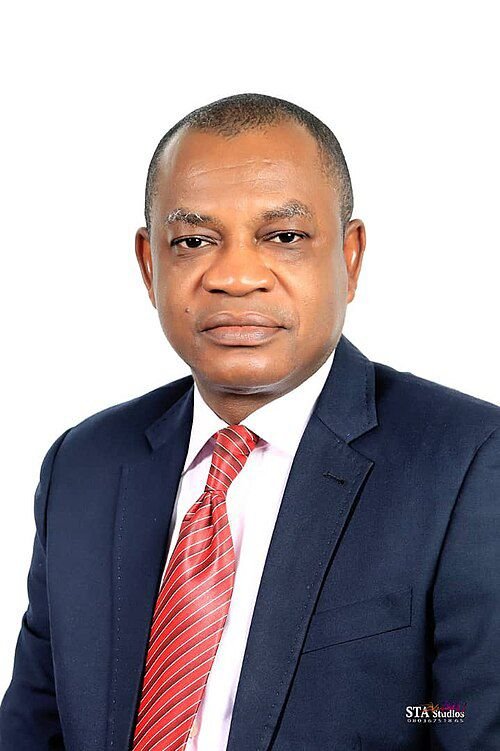
BY: Fr. Innocent Ike Nwachukwu, Ph.D.
In Catholic teaching, divine healing and restoration encompass the comprehensive salvation of the whole person – body, mind, and soul. Grounded in the ministry of Jesus as the divine Physician, this restoration is primarily mediated through the sacraments, prayer, and the redemptive meaning of human suffering. God is the ultimate source of all physical and spiritual healing, a truth woven throughout the testimonies of the Old and New Testaments. In his book Jesus of Nazareth, Pope Benedict XVI emphasizes this reality, noting that “healing is an essential dimension of the apostolic mission and of Christian faith in general. It can even be said that Christianity is a therapeutic religion, a religion of healing” (Joseph Ratzinger-Benedict XVI, Jesus of Nazareth).
The Church brings this therapeutic mission to life through the Sacrament of the Anointing of the Sick. Rooted in the biblical exhortation of the Letter of Saint James (cf. James 5:13–15), this sacrament offers the sick and suffering a tangible reassurance of God’s close, comforting presence. As the Catechism of the Catholic Church explains, this ritual connects personal suffering to a greater communal and divine purpose: “By the sacred anointing of the sick and the prayer of the priests, the whole Church commends those who are ill to the suffering and glorified Lord, that he may raise them up and save them. And indeed, she exhorts them to contribute to the good of the People of God by freely uniting themselves to the Passion and death of Christ” (Catechism of the Catholic Church, n. 1499).
Throughout the Old and New Testaments, the concepts of health, sickness, and healing appear frequently, demonstrating that the subject of well-being is both highly important and relevant. Scripture consistently reveals the healing power of God and establishes his absolute sovereignty over creation and the universe. For instance, in the Book of Deuteronomy, God declares his ultimate authority: “See now that I, I alone, am he, and there is no god besides me. It is I who bring both death and life, I who inflict wounds and heal them, and from my hand no one can deliver” (Deut 32:39). Furthermore, God reassures his people of his restorative power by promising: “The Lord will remove all sickness from you; he will not afflict you with any of the malignant diseases that you know from Egypt but will leave them with all those who hate you” (Deut 7:15). This divine authority is echoed by the prophet Jeremiah: “For I will restore your health; I will heal your injuries, oracle of the Lord” (Jer 30:17). Ultimately, these scriptures emphasize that sickness and health, as well as life and death, rest entirely in God’s hands.
In human history, God has been revered as the divine physician and healer, intervening either directly or through his chosen prophets. The biblical accounts of barren women, such as Sarah in Genesis (Gen 18:11-14) and the women of Abimelech’s household (Gen 20:17), offer a powerful glimpse into God’s supernatural intervention on behalf of the afflicted. Through the intercession of Abraham, God removed the stigma and pain of barrenness from Abimelech’s family: “Abraham then interceded with God, and God restored health to Abimelech, to his wife, and his maidservants, so that they bore children” (Gen 20:17).
In addition to these direct interventions, God frequently healed the sick through his prophets, who either offered divine counsel or performed specific healing actions. For example, the prophet Elisha instructed Naaman, the commander of the Syrian army, to wash in the Jordan River to be cured of his leprosy: “So Naaman went down and plunged into the Jordan seven times, according to the word of the man of God. His flesh became again like the flesh of a little child, and he was clean…” (2 Kings 5:1-15).
Another powerful example of prophetic healing is found in the story of King Hezekiah. When the king fell mortally ill, the prophet Isaiah, son of Amoz, brought him a dire message from the Lord: “Put your house in order, for you are about to die; you shall not recover.” In response, Hezekiah turned his face to the wall, prayed fervently, and wept bitterly. Before Isaiah could even leave the central courtyard, the word of the Lord came to the prophet again, saying: “Go back and tell Hezekiah, the leader of my people: ‘Thus says the Lord, the God of David your father: I have heard your prayer; I have seen your tears. Now I am healing you’” (2 Kings 20:1-5). Acting on Isaiah’s prophetic instruction, the king then applied a cake of figs to his boil (cf. Isaiah 38:21). Through this powerful combination of prayer and practical medicine, Hezekiah was completely cured (2 Kings 20:7), and God added fifteen years to his life (cf. 2 Kings 20:6).
This seamless connection between divine power and physical restoration intensifies in the New Testament, where miracle stories, particularly physical healings, appear on nearly every page. Jesus not only healed multitudes himself but also commissioned his disciples to extend this ministry. He sent them from town to town to “cure the sick” (Lk 10:9) so that, as he famously noted, “the blind regain their sight, the lame walk, lepers are cleansed, the deaf hear, the dead are raised, and the poor have the good news proclaimed to them” (Mt 11:5).
Given that, this healing ministry directly fulfills Isaiah’s ancient prophecies regarding the mission of the Messiah. Centuries earlier, Isaiah foretold: “The spirit of the Lord God is upon me, because the Lord has anointed me; he has sent me to bring good news to the afflicted, to bind up the brokenhearted, to proclaim liberty to the captives, release to the prisoners” (Isaiah 61:1). Isaiah further anticipated this miraculous era, urging the faithful to “say to the fearful of heart: Be strong, do not fear! Here is your God… he comes to save you. Then the eyes of the blind shall see, and the ears of the deaf be opened; then the lame shall leap like a stag, and the mute tongue sing for joy” (Isaiah 35:4-6).
The Catechism of the Catholic Church asserts that “Christ’s compassion toward the sick and his many healings of every kind of infirmity are a resplendent sign that ‘God has visited his people’ and that the kingdom of God is close at hand” (Catechism of the Catholic Church, n. 1503). As the ultimate physician of soul and body, Jesus has the power both to heal illness and to forgive sins. In a fractured world, finding healing is the necessary starting point for any meaningful relationship with God; after all, a lame person cannot walk a path until their legs are strengthened, nor can the blind navigate a road until their sight is restored.
The Gospels of Saint Mark and Saint Luke illustrate this dynamic through the miracle of the woman with a hemorrhage, a story frequently used to show how the sacraments allow us to touch Jesus in times of distress. Having suffered for twelve years and exhausted her savings on doctors who only made her condition worse, she approached Jesus from behind. Driven by profound faith, she believed, “If I but touch his clothes, I shall be cured” (Mk 5:28). The moment she touched the tassel of his cloak, her bleeding stopped completely. By instantly achieving what medicine could not do in over a decade, Jesus demonstrated the absolute healing power of God. Hence, it was the woman’s deep faith that moved Jesus to action, transforming her suffering into lasting restoration, joy, and peace (cf. Mk 5:24-34; Lk 8:43-48).
Conversely, Scripture notes that a lack of faith could limit great healings (Mk 6:5-6), proving that faith is the vital first step for any miracle. True faith demands absolute trust, total surrender, and complete dependency on God, in whom “we live and move and have our being.” Jesus invites us, “Come to me, all you who labor and are burdened, and I will give you rest” (Mt 11:28). This invitation reminds us to trust his power to transform our lives, no matter the sickness or challenges we face. Just as Jesus healed the blind, the lame, and those with various medical or spiritual afflictions, he remains capable of restoring our health today if we believe in his transforming power.
While an omnipotent God can heal any sickness, we must also responsibly safeguard our health by relying on medical professionals. Healthcare workers act as God’s instruments of healing, a truth beautifully reflected in the Book of Sirach: “Make friends with the doctor, for he is essential to you; God has also established him in his profession. From God the doctor has wisdom… My son, when you are ill, do not delay, but pray to God, for it is he who heals… Then give the doctor his place lest he leave; you need him too… For there are times when recovery is in his hands. He too prays to God that his diagnosis may be correct, and his treatment bring about a cure…” (Sirach 38:1-14).
We fulfill a divine calling when we pray for and care for the suffering. True care for the sick extends far beyond clinical duties. It demands a high level of professionalism balanced by “tenderness, straightforward compassion, and simple gestures freely given, like a caress that makes others feel loved.” Pope Leo XIV maintains that love is shown through closeness, presence, and care. Caring for the sick is not optional, but a core mission of the Church. Compassion must have a social dimension, involving families, health workers, pastoral agents, and communities. Loving our neighbor is the proof of our love for God. “Enkindled by this divine love, we will surely be able to give of ourselves for the good of all who suffer, especially our brothers and sisters who are sick, elderly or afflicted” (Pope Leo XIV, Message for the 34th World Day of the Sick, Holy See Press Office, Vatican City, January 20, 2026).