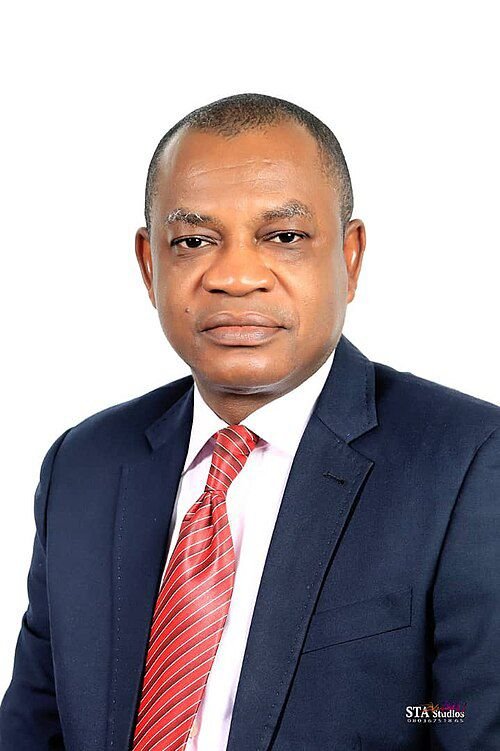
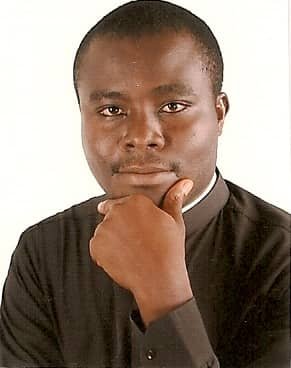
BY: UDO J. M. IWUJI, Tel: 08156198851
Mary remains the star of the sea, for she assists us through the liturgical season and year. Normally, the Church’s Liturgical Season and Year start with the Season of Advent, just as we mentioned earlier. At the beginning of the Church’s liturgical year, we meet a very meaningful Marian feast and celebration, the Solemnity of the Immaculate Conception. This is celebrated on December 8. During the solemnity, we celebrate Mary, who was singularly honored for being exempted from the common sin of humanity from the moment of her conception, and this unparalleled gift of grace is the real preparation of her, and thus she becomes the ideal model of our own preparation to receive the Lord in our lives.
The celebration of the birth of any child is not just the celebration of that child, but at the same time the celebration of the motherhood of the mother of such a child. It is so because without the mother, there will never be a child (even in surrogate motherhood, this is applicable). At Christmas, the celebration of the nativity of Jesus, Mary partakes as no other human being, as she is the mother of the Child whose birth is celebrated as an event of salvation. We find Mary as part of the Holy Family, whose feast comes up on the Sunday after Christmas.
During the Octave of Christmas, we celebrate the Solemnity of Mary, Mother of God, an ineffable mystery with which a village girl, a woman of our race, was associated. Herein, it will be necessary to call to mind the fact that Mary is revered as the mother of God, which was at one time a serious issue for debate. This issue was finally resolved during the Council of Ephesus in 431 AD, where Mary was declared Theotokos {Mother of God}. How wonderful it is to have the beginning of the year dedicated to the honor of Mary! Celebrating the feast of Epiphany, Mary is also present. It will not be out of place to say that, as St. Joseph receives the gifts of the Wise Men on behalf of the Child Jesus, the Child Jesus was adored in the hands of Mary.
In commemorating February 2, the feast of the Presentation of the Lord, Mary is also revered. The visit to the Temple by Mary with her son Jesus Christ made all the clearer what the future held for her. Indeed, Mary went to the temple with an unspeakable joy but returned home with a deep wound in the heart. Mary’s visit for the presentation of her son to the Lord terminated in sorrow; she was reminded by the old man, Simeon, what the future joy of her motherhood would be.
On March 25, we celebrate the Solemnity of the Annunciation of the Lord. Here, Mary is playing the leading role indeed. She is the one who receives the Angel’s announcement, and it is in her that the wonderful news of salvation is incarnated. This Solemnity celebrates the fiat of Mary, a fiat that gave the world hope for salvation.
The Lenten Season is one of the seasons of the Church, and the crescendo of this season is the remembrance of the moment of the Supreme Sacrifice, Christ’s death on the Cross. Indeed, Mary was there during the moment of the Supreme Sacrifice, playing her role as mother as foretold during her visit to the presentation in the Temple. This is the culminating point that made Mary be addressed as Mater Dolorsa, {Mother of Sorrows}.
On May 31, we celebrate the Visitation of the Blessed Virgin Mary. Prompted by the word of God through the angel, Mary answers immediately with her care for her cousin in need of assistance and as an instrument for Jesus to bring about his gift of sanctification on John the Baptist and his parents. Indeed, it is not out of place when we pray, Mary, with your Son, bless us, for John gained sanctification from Jesus, who was still in the Womb of Mary; how much more now that she lives eternally with Him. One of the ‘saints’ of our time, St. Justin Maria Russolillo (father founder of the Vocationist Family), regards this feast as our Lady of Perpetual Visitation. According to him, Mary is ever visiting us with her son, Jesus Christ. Following the post-Vatican II liturgical order, we celebrate the Immaculate Heart of Mary on the Saturday after the second Sunday after Pentecost. This feast celebrates Mary’s interiority, her {Mary’s} full-of-grace-love for God and mankind. We also call to mind that the whole month of May is specially dedicated to Mary. We remember this Igbo song, “Maria Ezenwanyi nke May- Mary the Queen of May.” The song typifies what the month of May is for.
On August 15, we celebrate another Marian Solemnity, the Solemnity of the Assumption of the Blessed Virgin Mary. This expresses the fullness of Mary’s association with the mystery of Christ, not only in the aspects of passion and cross but also of resurrection and glory. By so doing Mary becomes the model and fulfillment of the pilgrim Church’s hope. Within the same month of August, we celebrate less officially liturgical, but also meaningful for all true devotees of Mary, Mary as Queen and Mother, a lesser title in Christian tradition, we may say.
On September 8, we celebrate the birthday of Mary, brought here in our human calculation counting nine months from the feast of the Immaculate Conception. It is a warm, beautiful feast, at least for those cultures fond of celebrating the birthday of each person. And it is one of the three births into this world which the liturgy celebrates, the other two being the birth of the Lord at Christmas and the birth of John the Baptist. A week after, we celebrate, on September 15, the memory of Our Lady of Sorrows, the sword announced to her by Simeon, her close sharing in the mystery of the cross of her Son.
Our Lady of the Rosary is another memory that comes on October 7. It is rather a devotional celebration, though it has behind it a long and rich tradition in Catholic life. Is also another month dedicated to the rosary. Many saints have said many things about the Rosary. The Rosary is a very powerful weapon. It has helped the Church in different times and circumstances, more especially in times of trouble or war. When the Turkish forces threatened the Church, the weapon used by the Church was the Rosary. Pope Pius V led a Rosary crusade, and in 1571, the Church became victorious over Turkish forces. Because of this victory in October 1571, the same pope established 7th October as the feast of the Holy Rosary and the month of October as the month of the Rosary. Also, Pope Gregory XIII established the feast of Our Lady of Victories. Later, Pope Clement XI commanded that this feast should be celebrated every year. In a sort of biblical guess, the Presentation of Mary is celebrated on November 21, a date taken from the dedication of a church to our Lady of Jerusalem in the sixth century.
There are other expressions of Mary’s presence in the liturgy of the Church: The Mass in honor of the Blessed Virgin Mary on Saturday can be celebrated every week whenever there is no mandatory celebration; in the recitation of the Prayer of the Church, Mary’s canticle, the Magnificat, is recited or sung at the end of Vespers, and Compline is concluded with a Marian antiphon or hymn. All these are details and moments of Mary’s presence in the liturgy that an attentive Christian will discover and avail of their enriching incidence in a Christian devout life.
Conclusion: Be encouraged to journey with the blessed mother
The world in which we live today is most in need, and we need to seek constantly the face of God through the maternal intercession of the Blessed Mother- the mother of God. She will help us reach her son, Jesus Christ, just like she did during the wedding at Cana in Galilee. “On the third day there was a wedding at Cana in Galilee, and the mother of Jesus was there. Jesus also was invited to the wedding with his disciples. When the wine ran out, the mother of Jesus said to him, “They have no wine.” And Jesus said to her, “Woman, what does this have to do with me? My hour has not yet come.” His mother said to the servants, “Do whatever he tells you.” Now there were six stone water jars there for the Jewish rites of purification, each holding twenty or thirty gallons.[a] Jesus said to the servants, “Fill the jars with water.” And they filled them up to the brim. And he said to them, “Now draw some out and take it to the master of the feast.” So they took it. When the master of the feast tasted the water now become wine, and did not know where it came from (though the servants who had drawn the water knew), the master of the feast called the bridegroom and said to him, “Everyone serves the good wine first, and when people have drunk freely, then the poor wine. But you have kept the good wine until now.” This, the first of his signs, Jesus did at Cana in Galilee, and manifested his glory. And his disciples believed in him {John 2:1-11}. If Jesus could perform the miracle needed even when his time has not come, do you think He will not still do same to us today at the request of the Virgin Mother {His Mother}? Certainly, He will.
Let us therefore make it a point of duty have special encounter with her who stands at the right hand of her son in heaven, to teach us how to become docile children of God and to accept things the way she did during her life in this land of exile. Though Mary did not have everything the way she wanted, she accepted this concomitant of life in exile. In this light, we are urged to follow and imitate her example as St. Bernard asserts in these testifying words on ‘the way of Mary’:
Following her, you stray not;
Invoking her, you despair not;
Thinking of her, you wander not;
Upheld by her, you fail not;
Guided by her, you fear not;
Favored by her, you reached the goal.
Remember! Through Mary, our mother, we will succeed.